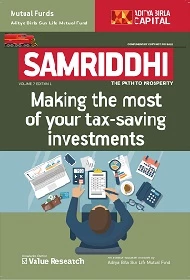
Samriddhi Volume 07 Edition 01 by ABSLMF
When it comes to tax saving investments, a disciplined approach is essential for both salaried individuals and business owners. Using smart tax planning India strategies can significantly improve long-term wealth creation. Among popular options, Equity Linked Savings Scheme (ELSS) for its higher return under the old tax regime, subject to other risk factors. With a 3-year lock-in and equity exposure, ELSS suits long-term investors using a Systematic Investment Plan (SIP). For shorter horizons, liquid funds, short-duration debt funds, and aggressive hybrid funds can offer balanced solutions aligned with different risk profiles.
Key Insights:
• Tax-saving investments should focus on long-term wealth creation, not just tax deductions.
• ELSS offers potential returns despite market volatility, making it an investment option for tax saving in many cases.
• Systematic Investment Plans (SIPs) in ELSS and mutual funds promote disciplined investing and can reduce market volatility impact.
• Diversify investments across liquid funds, debt funds, equity funds, and insurance to balance risk and returns.
• Start tax planning early and avoid last-minute investment decisions to maximize benefits.
Takeaways:
• Understand the tax benefits under Section 80C (Income Tax Act, 1961) and how ELSS and other tax saving instruments compare.
• Use SIPs in tax saving mutual funds for consistent investing and better cost averaging in tax-saving mutual funds.
• Incorporate term insurance and health insurance as part of a comprehensive tax-saving strategy.
• Align investment choices with your financial goals and risk tolerance, from short-term to retirement planning.
• Utilize online tax-saving platforms and digital tools for seamless investment management.
Why Download This Edition eBook?
• Gain a clear, actionable roadmap for making the most of your tax-saving investments.
• Explore detailed comparisons between ELSS and other tax-saving options.
• Learn expert strategies for financial planning for tax savings tailored to Indian taxpayers.
• Discover how to use SIPs and digital investing platforms to automate and optimize tax-saving investments.
• Understand tax implications like long-term capital gains (LTCG) and legal ways to minimize tax liability.
To Know More, Download Making the Most of Your Tax-Saving Investments | Samriddhi Volume 07 Edition 01 and take charge of your financial future!
Frequently Asked Questions on Tax Saving Investments
Which is the investment for tax saving in India?
The best investment for tax saving depends on your risk profile and goals. For long-term wealth creation, Equity Linked Savings Scheme (ELSS) mutual funds are often preferred over traditional options due to return potential while offering Section 80C (Income Tax Act, 1961) benefits.
How can I save income tax legally through investments?
You can reduce taxable income by investing in tax saving investments such as ELSS and other permissible investments under Sections 80C, while aligning them with your financial goals while enjoying tax benefits.
Are SIPs in tax saving mutual funds tax-free?
SIPs in tax saving mutual funds are not 100% tax-free, but they offer tax deductions under Section 80C and benefit from long-term capital gains taxation, making them tax-efficient investment options for disciplined investors.
Which investment is more tax-efficient: FD or SIP?
FD (Fixed Deposits) are safer, but interest is fully taxable, while SIPs in tax saving investments like ELSS provide tax deductions and better post-tax returns over the long term due to equity growth and favourable long-term capital gains (LTCG).
How should I plan tax saving investments?
Start early, invest regularly through Systematic Investment Plan (SIP), and diversify across equity and debt, insurance, and retirement products. For a step-by-step strategy and comparisons, download the Making the Most of Your Tax-Saving Investments eBook for deeper insights.
Click Here to Visit Different Editions of Volume 07:
Tax Saving Investments |
Budget Impact on Personal Finance |
Personal Finance Budget Impact |
Financial Independence |
Financial Security (वित्तीय सुरक्षा).
Disclaimer:
Investors are advised to consult their tax consultant or financial advisor to determine tax benefits applicable to them.
An Investor Education and Awareness Initiative of Aditya Birla Sun Life Mutual Fund.
All investors have to go through a one-time KYC (Know Your Customer) process. Investors to invest only with SEBI registered Mutual Funds. For further information on KYC, list of SEBI registered Mutual Funds and redressal of complaints including details about SEBI SCORES portal, visit link: https://mutualfund.adityabirlacapital.com/Investor-Education/education/kyc-and-redressal for further details.
Mutual Fund investments are subject to market risks, read all scheme related documents carefully.
म्यूचुअल फंड निवेश बाज़ार जोखिम के अधीन हैं, योजना संबंधी सभी दस्तावेज़ों को सावधानी से पढ़ें।

 Home Loans
 Personal Loans
 SME Loans
 Business Loans - Udyog Plus
  Loan Against Securites
 Loan Against Property
 Mutual Fund
 Stock and Securities
 Wealth
 Portfolio Management Services
 Pension Funds
 Life Insurance
 Health Insurance
 Wellness Solutions
 Pay Bills
 Pay for anything
 Pay Anyone
 Pay on Call
 Credit Cards
 Prepaid Gift Card



 1800-270-7000