 Home Loans
 Personal Loans
 SME Loans
 Business Loans - Udyog Plus
  Loan Against Securites
 Loan Against Property
 Mutual Fund
 Stock and Securities
 Wealth
 Portfolio Management Services
 Pension Funds
 Life Insurance
 Health Insurance
 Wellness Solutions
 Pay Bills
 Pay for anything
 Pay Anyone
 Pay on Call
 Credit Cards
 Prepaid Gift Card



 1800-270-7000
-
Our Products
-
Self Care
- Downloads
- Learnings
- About Us
-
More
-
Shareholders
-
Shareholders
-
-
SIP Calculators

-
Shareholders
 IMPORTANT ALERT ! Beware of Fake AMC App, Online Impersonation & Scam WhatsApp Groups.

ABC Solution 
Loans
Insurance



 AppStore
 Playstore
Aditya Birla Sun Life AMC Limited


Aditya Birla Sun Life AMC Limited

Factors That Influence Silver ETF Prices
Feb 27, 2026
5 min
0 Rating
Silver ETF prices are influenced by global supply and demand, industrial usage, inflation trends, currency movements, and overall market sentiment, depending on market conditions.
Investor interest in silver has accelerated sharply in recent months. Silver ETF inflows jumped by 139% month-on-month in Jan'26, rising to ₹9,463 crore compared to ₹3,962 crore in Dec’25. Assets under management in silver ETFs also increased to ₹1.16 lakh crore significantly in Jan’26, up from ₹72,652 crore in Dec’25, marking a growth of 61% monthly.
This surge highlights the growing traction of silver ETFs and underscores the importance of understanding the key factors that influence silver ETF prices, which we explore in the sections below.
What are Silver ETFs?
A silver ETF is an investment vehicle that aims to track the price of silver. These silver exchange-traded funds are listed on stock exchanges and can be bought or sold during market hours, similar to shares. They are designed to provide exposure to silver without the need to physically hold the metal.
Many investors consider silver ETF funds as a way to diversify their portfolios. However, like all market-linked products, their returns are subject to fluctuations in silver prices, depending on market conditions. There is no guarantee of returns, and the investment objective may or may not be achieved.
Understanding what drives the price of silver is important before investing in any silver funds (ETFs), especially for those evaluating options such as the best silver ETF for their portfolio.
Global Silver Supply and Demand Dynamics
The price of silver is primarily influenced by global supply and demand. On the supply side, silver is mined in various countries and is also obtained as a by-product of other metal mining activities. Disruptions in mining operations, regulatory changes, or geopolitical developments can affect supply, as the market conditions vary.
On the demand side, silver is used for investment, industrial purposes, and jewellery. When global demand rises faster than supply, prices may increase. Conversely, if supply exceeds demand, prices may soften. These movements directly impact the value of a silver ETF, as it tracks the underlying silver price.
Since supply and demand are influenced by global economic and political developments, silver ETF prices can fluctuate accordingly.
Industrial Demand for Silver
Silver is widely used in industries such as electronics, renewable energy, healthcare, and automotive manufacturing. Its conductivity and durability make it a valuable industrial metal.
When industrial activity expands, demand for silver may increase, which can support silver prices, depending on market trends. For example, growth in clean energy technologies or consumer electronics manufacturing may raise silver consumption. On the other hand, an economic slowdown may reduce industrial demand, potentially affecting prices.
Because Silver exchange-traded funds reflect the market price of silver, changes in industrial demand can influence the performance of silver ETF funds.
Role of Inflation and Interest Rates
Silver is sometimes viewed as a hedge against inflation. During periods of rising inflation, investors may turn to precious metals as a store of value, depending on market sentiment. This can increase demand for silver and may influence the price of a silver ETF.
Interest rates also play a role. When interest rates rise, fixed-income instruments may become more attractive, which can reduce the appeal of non-yielding assets like silver. Conversely, in a lower interest rate environment, silver may attract more investor interest, depending on overall economic conditions.
However, these relationships are not fixed and can vary over time. Investors should remember that macroeconomic factors can influence prices in complex ways.
Impact of USD and Currency Movements
Silver is globally priced in US dollars. As a result, movements in the dollar can affect silver prices.
When the US dollar strengthens, silver may become more expensive for holders of other currencies, which can impact global demand, depending on market conditions. A weaker dollar may have the opposite effect. These currency dynamics can influence the value of silver funds ETF products listed in domestic markets.
For investors in India or other countries, currency fluctuations may also affect returns from a silver ETF, even if the international price of silver remains stable.
Market Speculation and Commodity Cycles
Like other commodities, silver is influenced by investor sentiment and market speculation. Traders in global commodity markets often take positions based on expectations about economic growth, inflation, or geopolitical developments.
Commodity cycles can lead to periods of rising or falling prices. During bullish cycles, prices may rise due to strong demand and positive sentiment. During bearish phases, prices may decline due to oversupply or weak demand, depending on market conditions.
These cycles can make silver more volatile compared to some other asset classes. Therefore, even when evaluating what may seem like the best silver ETF, investors should consider that price movements can be sharp and unpredictable.
Tracking Mechanism of Silver ETFs
A silver ETF typically holds physical silver or invests in instruments linked to silver prices. The fund aims to reflect the price of silver, subject to tracking error and expenses.
The net asset value of the ETF is based on the underlying silver holdings. However, the market price of silver exchange-traded funds may slightly differ from the net asset value due to demand and supply on the exchange, depending on market conditions.
It is important to note that silver ETF funds do not guarantee returns. Their performance depends on movements in silver prices, which are influenced by the various global and economic factors discussed above.
Understanding the Broader Picture Before Investing
Silver ETFs offer a convenient way to gain exposure to silver without holding the metal physically. However, their prices are shaped by multiple interconnected factors such as global supply and demand, industrial usage, inflation trends, currency movements, and commodity cycles.
Since these factors can change based on economic and geopolitical developments, returns from a silver ETF depend on market conditions. Investors should assess their financial goals, risk appetite, and investment horizon before investing in silver ETF products.
A well-informed approach and proper asset allocation can help investors align such investments with their broader portfolio strategy.
:
Disclaimers:
The information herein is meant only for general reading purposes and the views being expressed only constitute opinions and therefore cannot be considered as guidelines, recommendations or as a professional guide for the readers. The document has been prepared on the basis of publicly available information, internally developed data and other sources believed to be reliable. Recipients of this information are advised to rely on their own analysis, interpretations & investigations. Readers are also advised to seek independent professional advice in order to arrive at an informed investment decision.
Source:
https://www.businesstoday.in/mutual-funds/story/mutual-fund-aum-jumps-over-six-fold-in-10-years-touches-rs-8023-lakh-cr-on-sip-led-growth-515651-2026-02-11#:~:text=The%20industry%E2%80%99s%20AUM%20has%20grown%20from%20about%20Rs%2012%20lakh%20crore%20in%
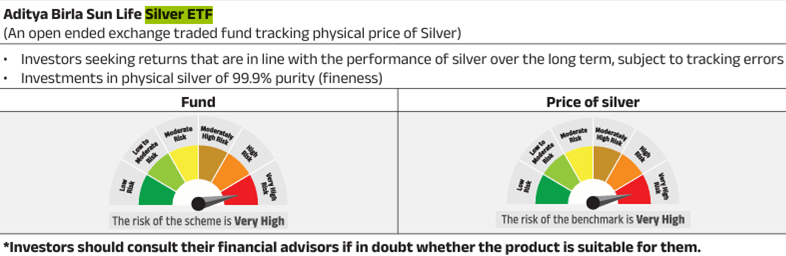
Mutual Fund investments are subject to market risks, read all scheme related documents carefully.

Silver ETF prices are primarily driven by global silver prices, which are influenced by supply and demand, industrial usage, inflation trends, currency movements, and market sentiment, depending on market conditions.
Higher industrial demand may increase silver prices if supply remains stable. Lower demand may soften prices, depending on economic conditions.
Yes. Silver exchange-traded funds are linked to global silver prices, which are determined in international commodity markets.
Yes. Since silver is priced in US dollars, currency movements can affect returns for investors in other countries, depending on exchange rate trends.
Silver prices have historically shown higher volatility in certain market phases. However, volatility can vary depending on market conditions and broader economic factors.