 Home Loans
 Personal Loans
 SME Loans
 Business Loans - Udyog Plus
  Loan Against Securites
 Loan Against Property
 Mutual Fund
 Stock and Securities
 Wealth
 Portfolio Management Services
 Pension Funds
 Life Insurance
 Health Insurance
 Wellness Solutions
 Pay Bills
 Pay for anything
 Pay Anyone
 Pay on Call
 Credit Cards
 Prepaid Gift Card



 1800-270-7000
-
Our Products
-
Self Care
- Downloads
- Learnings
- About Us
-
More
-
Shareholders
-
Shareholders
-
-
SIP Calculators

-
Shareholders
 IMPORTANT ALERT ! Beware of Fake AMC App, Online Impersonation & Scam WhatsApp Groups.

ABC Solution 
Loans
Insurance



 AppStore
 Playstore
Aditya Birla Sun Life AMC Limited


Aditya Birla Sun Life AMC Limited

Are Flexi Cap Funds Suitable for Long-Term Financial Goals?

Apr 21, 2026
5 min
0 Rating
Flexi-cap funds offer flexibility across market segments and may support long-term goals, depending on market conditions and investor suitability.
India’s mutual fund industry has seen strong participation in recent years, with total assets under management (AUM) crossing ₹82 lakh crore in February 2026.
Equity-oriented categories, including flexi-cap mutual funds, have gained attention due to their diversified approach.
As investors increasingly focus on long-term wealth creation and goal-based investing, many consider whether a flexi-cap fund can fit into their financial planning strategy.
This brings up an important question: Are flexi-cap funds a suitable choice for achieving long-term financial goals? To understand this better, it is important to look at how flexi-cap funds work,
their benefits, and the risks involved before making an investment decision.
What Is a Flexi Cap Fund?
It is a dynamic and open-ended equity scheme, investing across companies of different sizes: small-cap, mid-cap, and large-cap, without fixed allocation limits.
This flexibility allows fund managers to:
Adjust investments based on market opportunities
Diversify across sectors and market capitalisations
Respond to changing economic conditions
Unlike category-specific funds, flexi-cap funds are not restricted to a single segment, which may help balance risk and return potential depending on market conditions.
How Do Flexi Cap Funds Work?
A flexi-cap mutual fund works by dynamically allocating investments across different market capitalisations.
For instance:
During stable market phases, allocation may tilt towards large-cap stocks
In growth phases, exposure to mid- and small-cap stocks may increase
That enables the fund to adjust to market trends. However, performance depends on fund strategy and market conditions.
Who Should Invest in Flexi Cap Funds
Flexi-cap funds may be suitable for:
Investors looking for diversified equity exposure
Individuals with a long-term investment horizon
Those comfortable with market-linked returns
Investors seeking a balance between stability and potential growth
Suitability depends on individual financial goals, risk appetite, and time horizon.
Why Long-Term Investors Consider Flexi Cap Funds?
Long-term investors often prefer flexi-cap funds due to their adaptability.
Key reasons include:
Diversification: Exposure across multiple market segments
Flexibility: Ability to adjust allocation based on market conditions
Growth potential: Participation in different phases of the market cycle
Over longer periods, equity investments may help in wealth creation depending on market conditions. This is why some investors consider flexi-cap funds as part of their long-term strategy.
How Flexi Cap Funds Align with Goal-Based Investing?
Investments based on goals focus on aligning investments with specific financial objectives such as retirement, education, or home purchase.
A flexi-cap fund may support this approach by:
Offering diversified exposure in a single fund
Allowing long-term compounding potential
Adapting allocation as market conditions change
For goals that are several years away, equity-oriented funds may be considered. However, outcomes depend on market performance and investment discipline.
What are the Benefits of Flexi Cap Funds?
Flexi-cap funds offer several advantages:
Dynamic allocation: Freedom to invest across market caps
Diversification: Reduces reliance on a single segment
Professional management: Managed by experienced fund managers
Convenience: One fund provides exposure to multiple segments
For investors looking for the best flexi-cap fund, it is important to evaluate factors like investment strategy, consistency, and alignment with financial goals rather than relying on past performance alone.
What are the Risks with Flexi Cap Funds?
Like any other equity investment, flexi-cap mutual funds may also pose risks:
Market risk: Returns may fluctuate due to market movements
Strategy risk: Allocation decisions may impact performance
Volatility: Exposure to mid- and small-cap stocks may increase fluctuations
No guaranteed returns: Outcomes depend on market conditions
Investors should assess their risk tolerance before investing and consider a long-term commitment to manage volatility.
Building Long-Term Confidence with Flexible Investing
Flexi-cap funds provide a flexible approach to equity investing, which may appeal to investors aiming for long-term financial goals. Their ability to move across market segments allows them to adapt to changing market environments, making them a versatile option.
However, suitability depends on individual financial objectives, time horizon, and risk appetite. While flexi cap funds can play a role in goal-based investing, investors should make informed decisions and review their portfolios periodically, keeping in mind that returns depend on market conditions.
Disclaimers:
The information herein is meant only for general reading purposes and the views being expressed only constitute opinions and therefore cannot be considered as guidelines, recommendations or as a professional guide for the readers. The document has been prepared on the basis of publicly available information, internally developed data and other sources believed to be reliable. Recipients of this information are advised to rely on their own analysis, interpretations & investigations. Readers are also advised to seek independent professional advice in order to arrive at an informed investment decision.
Source:
CNBC TV18
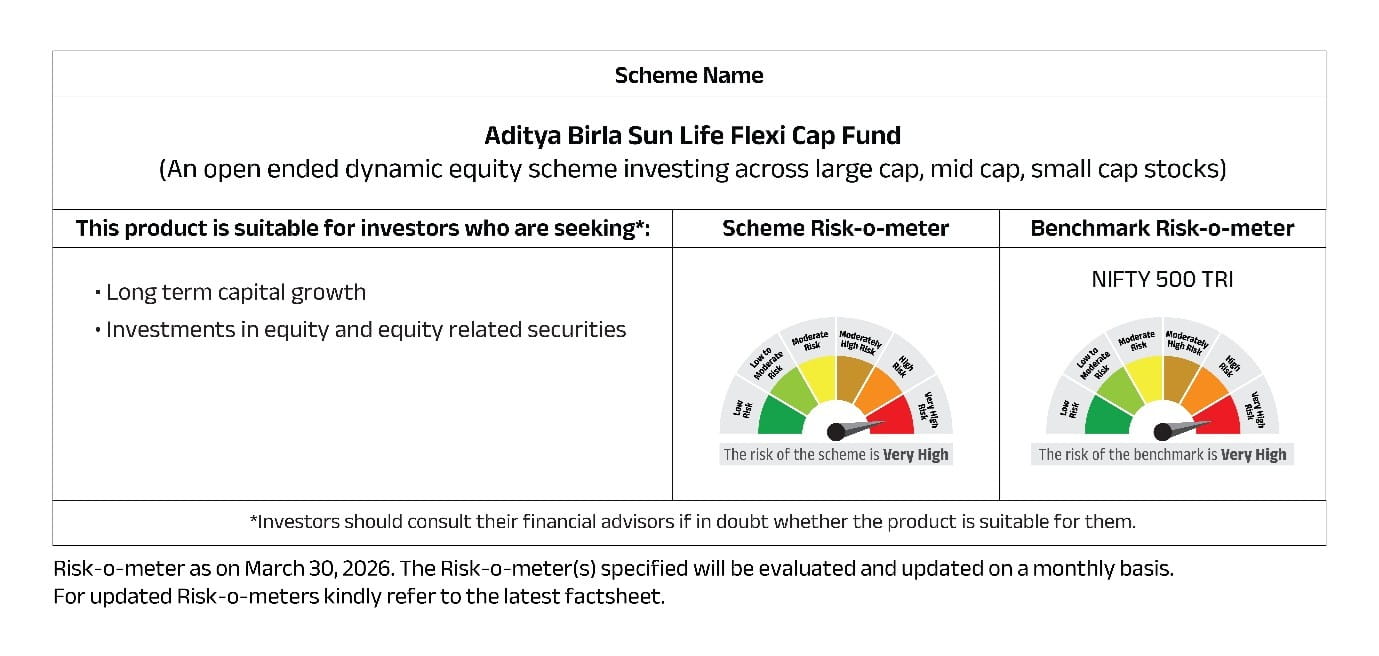
Mutual Fund investments are subject to market risks, read all scheme related documents carefully.

Flexi-cap funds are equity mutual funds investing in large, mid, and small-cap stocks without fixed allocation limits.
They may be considered for long-term investing due to diversification and flexibility, depending on market conditions and individual suitability.
Yes, they may align with long-term goals such as retirement or education, depending on financial planning and market performance.
Investors should consider market risk, volatility, and strategy-related risks, as returns are not guaranteed and depend on market conditions.
They may be suitable for investors seeking diversified equity exposure and having a long-term investment horizon, based on their risk appetite and financial goals.