 Home Loans
 Personal Loans
 SME Loans
 Business Loans - Udyog Plus
  Loan Against Securites
 Loan Against Property
 Mutual Fund
 Stock and Securities
 Wealth
 Portfolio Management Services
 Pension Funds
 Life Insurance
 Health Insurance
 Wellness Solutions
 Pay Bills
 Pay for anything
 Pay Anyone
 Pay on Call
 Credit Cards
 Prepaid Gift Card



 1800-270-7000
-
Our Products
-
Self Care
- Downloads
- Learnings
- About Us
-
More
-
Shareholders
-
Shareholders
-
-
SIP Calculators

-
Shareholders
 IMPORTANT ALERT ! Beware of Fake AMC App, Online Impersonation & Scam WhatsApp Groups.

ABC Solution 
Loans
Insurance



 AppStore
 Playstore
Aditya Birla Sun Life AMC Limited


Aditya Birla Sun Life AMC Limited

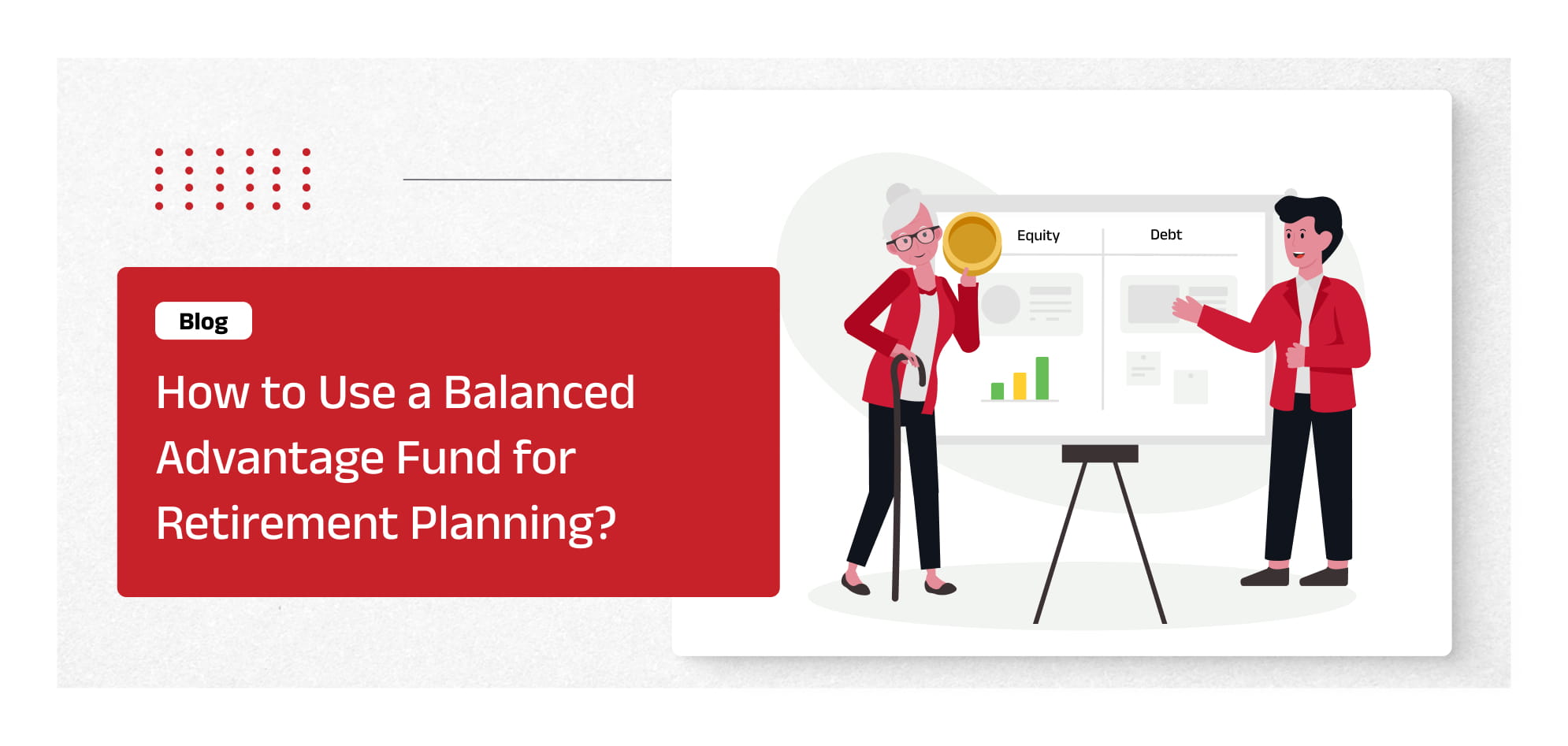
How to Use a Balanced Advantage Fund for Retirement Planning?
Aug 21, 2026
5 min
0 Rating
Retirement can last for several decades, making long-term financial preparation increasingly important. Government projections indicate that India's population aged 60 years and
above could rise from about 100 million in 2011 to around 230 million by 2036, when nearly one in seven Indians could be 60 or older.
(PIB)
For investors building a retirement corpus, a balanced advantage fund can be one component of a diversified retirement investment plan. It dynamically adjusts exposure to equity and debt rather than maintaining a fixed allocation.
Why Is Retirement Planning Important?
Retirement planning involves estimating how much money you may need once regular employment income stops and creating an investment strategy to work towards that amount.
Increasing longevity makes this especially relevant. Government projections indicate that India's senior citizen population could represent around 15% of the population by 2036.
(PIB)
Starting early can provide a longer period for investments to participate in market growth.
How Can a Balanced Advantage Fund Support Retirement Planning?
Dynamic Asset Allocation
A balanced advantage fund, also called a dynamic asset allocation fund, can adjust its allocation between equity and debt based on its investment model and market conditions. SEBI categorises such schemes under the hybrid fund category.
This approach can help investors maintain exposure to multiple asset classes without having to manually change the allocation frequently.
Managing Market Volatility
Equity can experience significant short-term fluctuations. Debt generally behaves differently and can potentially moderate overall portfolio volatility.
A Balance Advantage Fund combines these asset classes in varying proportions. It does not eliminate risk, but dynamic allocation may help manage portfolio fluctuations depending on market conditions.
Long-Term Wealth Accumulation Potential
Retirement is generally a long-term financial goal. Equity exposure provides the potential for capital appreciation over longer periods, while debt can provide relative stability.
Equity Exposure for Growth
Equity allocation allows a portion of the retirement portfolio to participate in the growth potential of listed companies. This can be relevant during the accumulation phase when retirement may still be several years away.
Debt Allocation for Stability
Debt securities can provide another source of portfolio returns and may help reduce dependence on equities alone. Debt investments nevertheless carry risks such as interest-rate and credit risk.
Potential to Reduce Emotional Investing
A predefined dynamic asset-allocation process can reduce the need for investors to personally decide when to move between equity and debt.
Suitable for Goal-Based Investing
A balanced advantage fund can be linked to a specific long-term objective such as retirement.
Benefits of Including a Balanced Advantage Fund in Retirement Investment Planning
Including a balanced advantage strategy can offer several practical benefits:
Diversification: Exposure is spread across equity and debt rather than concentrated in a single asset class.
Dynamic allocation: The fund manager adjusts the asset mix according to the scheme's stated strategy.
Growth potential: Equity exposure can contribute to long-term capital appreciation.
Portfolio stability: Debt exposure may moderate some equity-market volatility.
Professional management: Asset-allocation decisions are implemented by the investment team.
Goal alignment: The fund can form part of a broader retirement investment planning strategy.
These benefits should be considered alongside market, credit, interest-rate and asset-allocation risks.
Who Can Consider a Balanced Advantage Fund for Retirement?
A balanced advantage fund may be considered by investors who want both equity and debt exposure within one scheme and are comfortable with market-linked returns.
It may be relevant for investors who:
Have a medium to long-term retirement horizon.
Prefer professionally managed asset allocation.
Can tolerate moderate fluctuations in investment value.
Do not want their retirement portfolio to depend entirely on equities.
Understand that dynamic allocation does not protect against all market losses.
How to Build a Retirement Investment Plan Using a Balanced Advantage Fund?
Estimate Retirement Corpus
Start by estimating expected retirement expenses, inflation, healthcare requirements and the number of years the corpus may need to support you.
Define Investment Horizon
Calculate how many years remain until retirement. A longer horizon can provide more time to deal with short-term market volatility.
Assess Risk Appetite
Consider how much decline in portfolio value you would be comfortable experiencing without abandoning the investment strategy.
Choose SIP or Lump Sum
A systematic investment plan allows regular contributions towards the retirement corpus. A lump-sum investment deploys a larger amount at once.
Review Portfolio Regularly
Review progress periodically instead of reacting to every market movement. Check whether contributions remain adequate and whether your asset allocation still matches the retirement goal.
Rebalance as Retirement Nears
Risk capacity may change as retirement approaches because the time available to recover from significant market declines becomes shorter.
Keep the Retirement Goal at the Centre of the Strategy
A balanced advantage fund should support the retirement plan rather than define it.
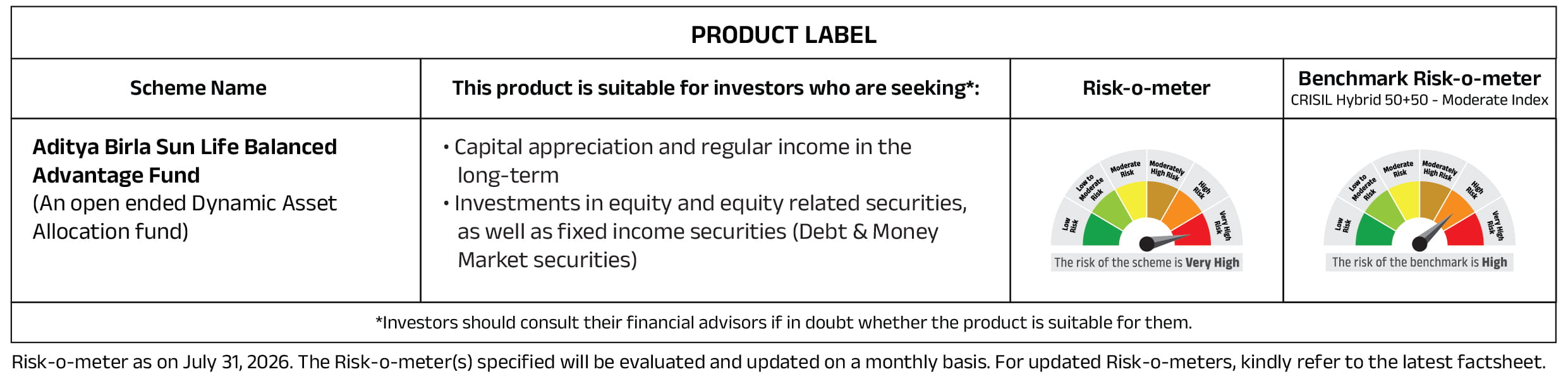
For example, the Aditya Birla Sun Life Balanced Advantage Fund is officially classified as an open-ended
Dynamic Asset Allocation Fund that invests dynamically across equity, equity-related instruments and fixed-income securities.
Blog Disclaimer
The information herein is meant only for general reading purposes, and the views being expressed only constitute opinions and therefore cannot be considered as guidelines, recommendations or a professional guide for the readers. The document has been prepared on the basis of publicly available information, internally developed data, and other sources believed to be reliable. Recipients of this information are advised to rely on their own analysis, interpretations & investigations. Readers are also advised to seek independent professional advice in order to arrive at an informed investment decision.
SEBI Registration No. MF/020/94/8
Mutual Fund investments are subject to market risks, read all scheme related documents carefully.

It is a hybrid mutual fund that dynamically changes its allocation between equity and debt according to its investment strategy.
It may be suitable as part of a retirement portfolio if its risk profile, investment approach and time horizon match the investor's requirements.
It dynamically adjusts equity and debt exposure based on the scheme's defined asset-allocation approach.
An equity fund primarily invests in equities, while a balanced advantage fund dynamically combines equity and debt exposure.
Yes, it may form one part of a diversified retirement strategy, depending on your goals and risk tolerance.
Potential benefits include diversification, dynamic allocation, equity participation and debt exposure within one portfolio.
Risks include market volatility, interest-rate risk, credit risk and the possibility that asset-allocation decisions may not perform as expected.
The Aditya Birla Sun Life Balanced Advantage Fund may be evaluated as one component of a retirement portfolio after considering its strategy, risks, and suitability.
The choice depends on available capital, cash flow, investment horizon and personal financial circumstances.
Starting earlier generally provides a longer investment period, but retirement planning can begin at any stage by setting goals and creating an appropriate investment strategy.